The Secret Mountain Keeping Texas Bighorn Alive
Two days at Elephant Mountain Wildlife Management Area, where Texas has spent four decades bringing desert bighorn sheep back from the edge, and where the fight to keep them is far from over.
 Cory Ames
17 min read
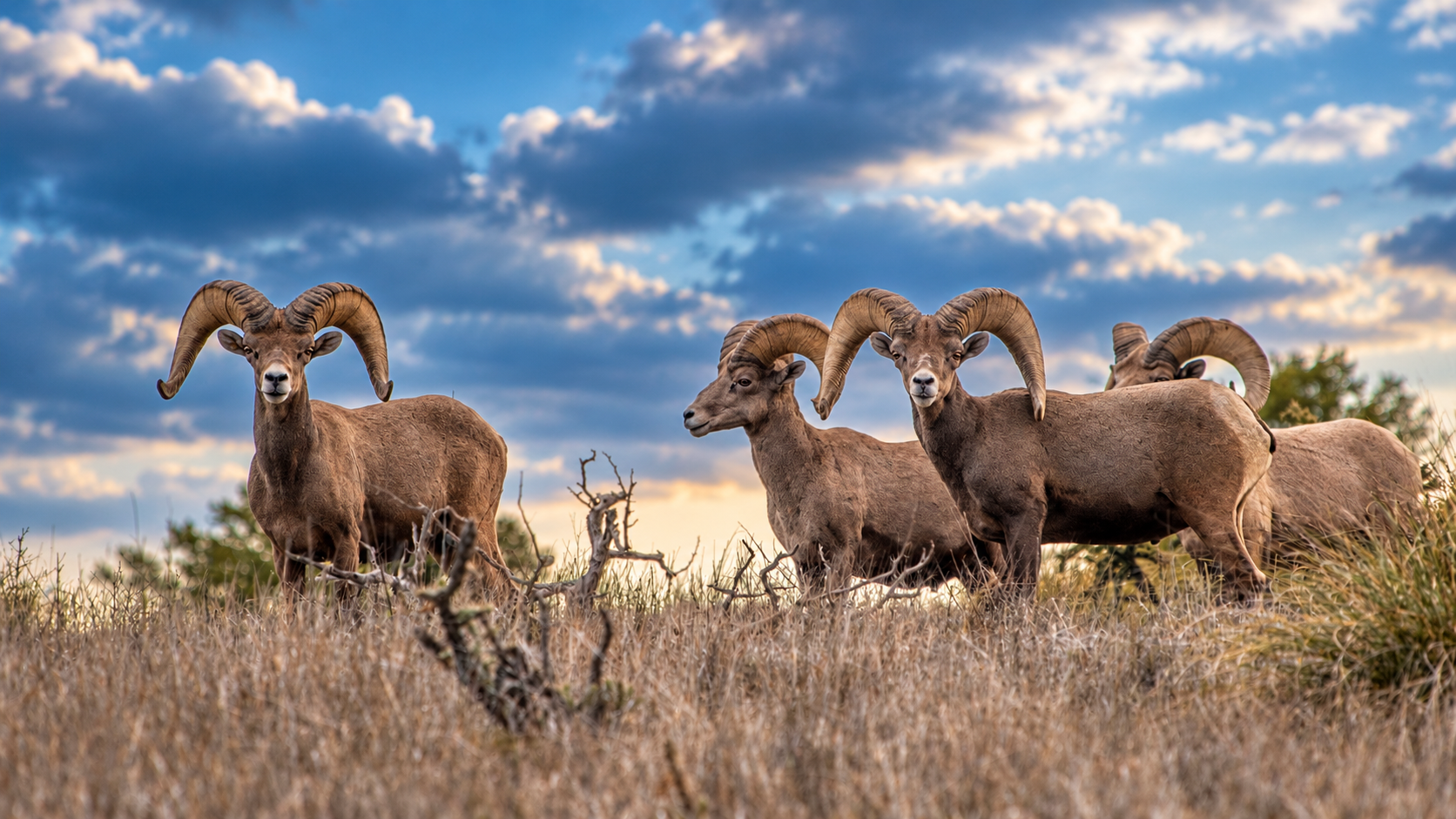
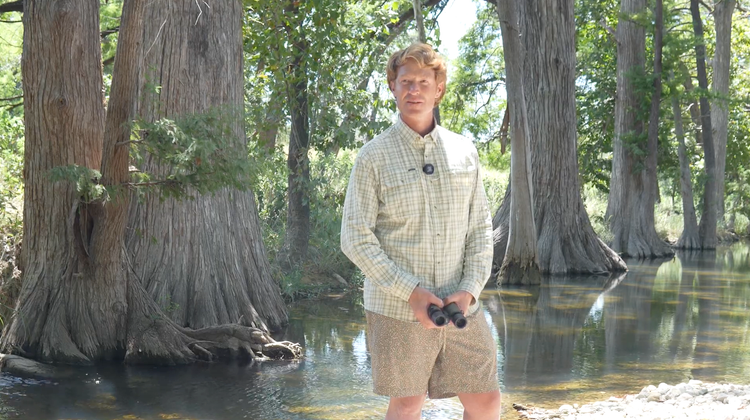
A film for Texas Parks and Wildlife Magazine, with Cody McEntire, Elephant Mountain WMA, and Jose Etchart, TPWD Desert Bighorn Sheep Program Leader.
The Mountain
Cory Ames: I felt anxious on the drive. We headed south out of Alpine on a Monday morning into what felt like a completely different weather system. The night before, a storm had rolled through, some of the loudest lightning strikes I had heard, right outside our door. Power went out, rivers ran alongside the streets.
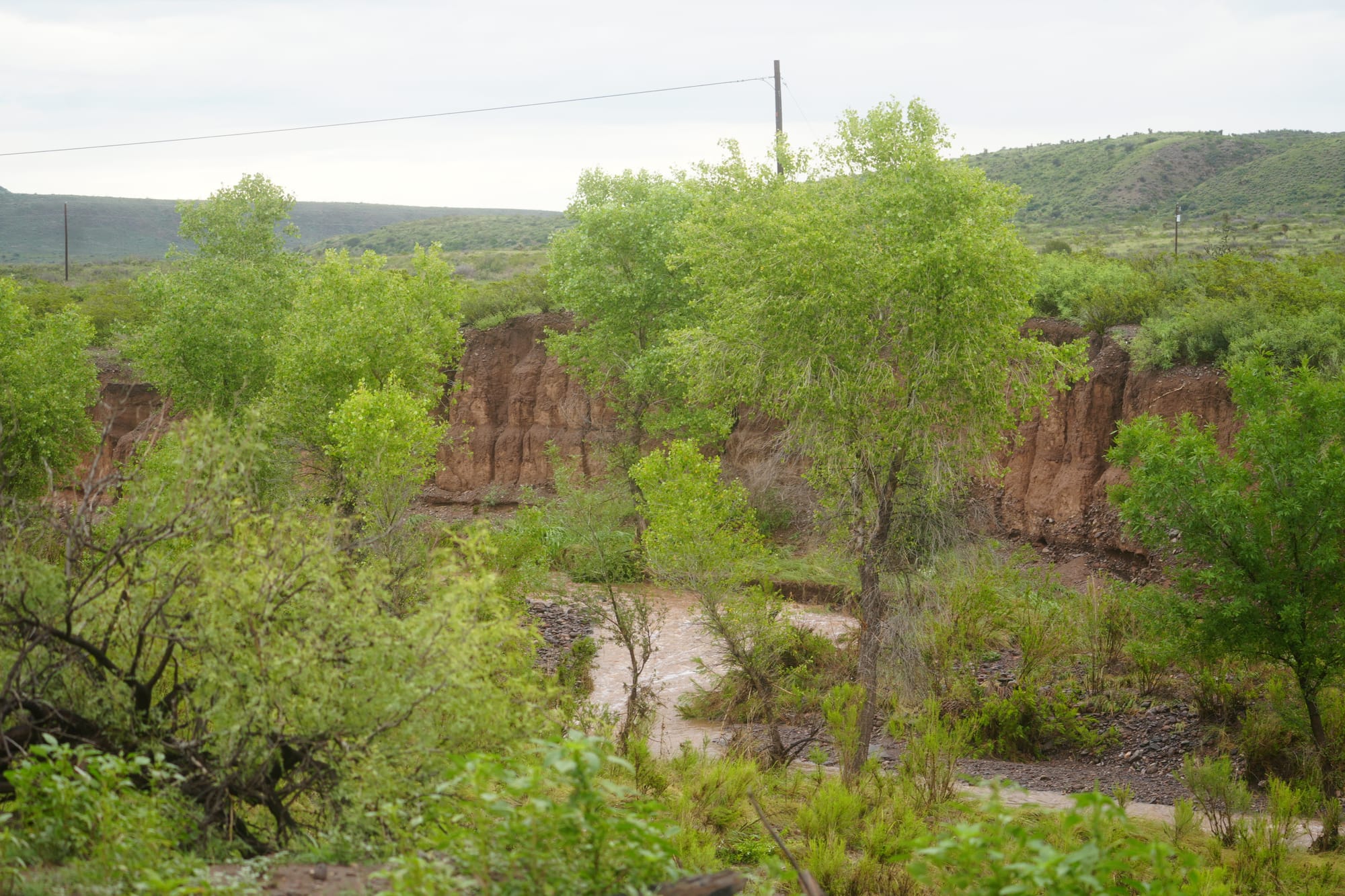
The ground was muddy, with little to hold the water. There was no telling what 30 miles south would look like. We continued driving, drizzle hitting the windshield, much colder and wetter than I had imagined July anywhere in Texas might be. Rolling hills, jagged mesas shooting up over the pastures, incredibly green.
And then, among the clouds, Elephant Mountain. Making out the top on the rainy morning was somewhat difficult, but it announces itself as you get closer. We were here on assignment for Texas Parks & Wildlife magazine. Two days at Elephant Mountain Wildlife Management Area to find out whether Texas still has its bighorn sheep, and whether it can keep them.
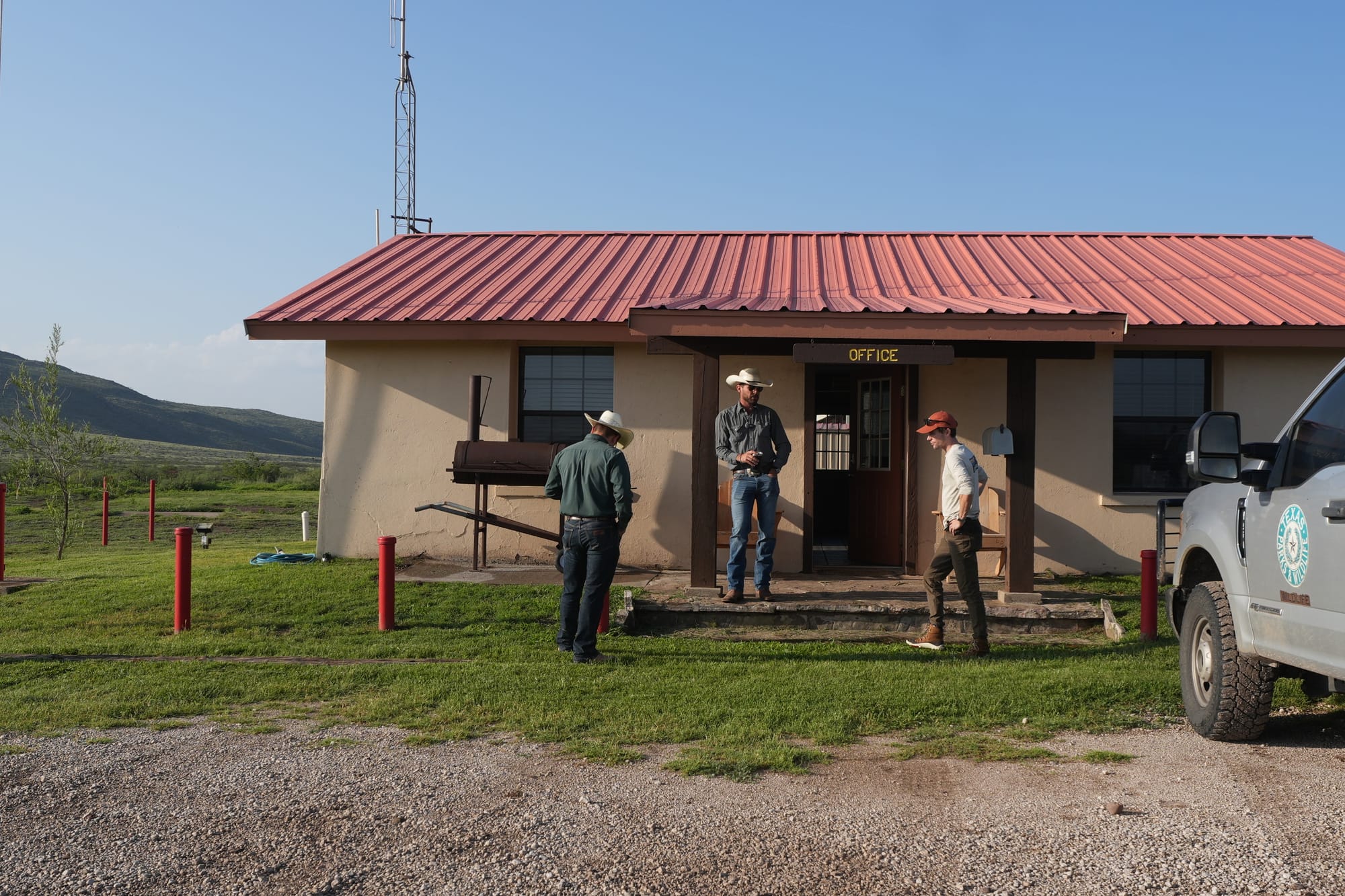
We met Cody McEntire shortly after pulling in. He welcomed us with a smile and led us straight to the arroyo crossing the mountain road. It was running high. We were not going up that morning. That was clear. So the three of us headed back to the office instead, to learn about the sheep, the history, and how this place had spent 40 years trying to bring that native Texas icon back from the edge.
A Sky Island
Cody McEntire: We're in the Trans-Pecos region of Texas, so far West Texas. We are currently on Elephant Mountain WMA. Elephant Mountain WMA was donated back in 1985 by Mr. C.G. Johnson, with the stipulation it be used for desert bighorn sheep restoration. It's about 23,000 acres, and the mountain itself sits dead center of the WMA and encompasses a little over 8,000 acres.
Acquiring this mountain was also just so integral because it's a very defensible mountain. There's a lot of resources on that mountain, lots of food, lots of water. Elephant Mountain rises about 2,000 feet from the desert floor, so there are several different elevation changes in the vegetation that's there and the animals that may persist there.
It's a sky island, which means the connective habitat around it doesn't allow so much for exotics to come in. They receive more rainfall being at higher elevation, and a lot of times you don't see as much invasive vegetation coming into them, so you really have almost a pristine habitat up there.
You've got to realize that sheep were completely extirpated out of Texas in the 1960s. There were several attempts to reestablish them that were unsuccessful. Back in the 1980s, the Texas Bighorn Society built pens up at Sierra Diablo WMA, took sheep, and started releasing offspring. They were mildly successful, but nothing ever really established.
But once this place was donated in 1985, they honored the wish of Mr. C.G. Johnson by bringing 20 bighorn to this mountain in 1987, 10 ewes and 10 rams, and then supplemented five more rams in 1989. We started with 25 sheep on this mountain, and since 2000, it's produced a surplus almost every two years. So we've been able to use those animals to either restore populations that may be void in the area, or to bolster existing populations that just need a little push. That's the huge success. Over those 40 years, this place has been integral to doing that.
The Program
Cory Ames: By the time the rain let up that afternoon, the creek had come down just enough. Cody took us up in the truck. The road was narrow. The truck stayed in low, but we made it. And Elephant Mountain gave us what it had that day. Wet rock, low cloud, some wildlife, but no sheep. Yet.
There's a lot of ground to cover when you're trying to understand a place like this. Cody and the changing weather are one part of it, but the bighorn program in Texas is bigger than any one mountain. And the guy who runs it agreed to join us, too. Jose oversees the desert bighorn sheep program for the entire state, which effectively is the Trans-Pecos.
Jose Etchart: My name's Jose Etchart. I'm the Texas Parks and Wildlife Department desert bighorn sheep program leader. Unfortunately, it was because of man coming in and changing things, from our livestock management to habitat fragmentation to overhunting, that the populations did go extinct in Texas. Desert bighorn used to inhabit 16 historical mountain ranges. Right now, we have them in only 11.
Elephant Mountain has been our brood facility in Texas. In the past 10 years, the majority of our translocations have come out of this place. It's one of those mountain ranges that shows the concept of what carrying capacity does. When the population increases to a certain extent, we go in there and translocate some of those sheep to a different mountain range. That relieves the mountain from pressure, and then we keep going with that system. Elephant Mountain has proven it can do that in the past several years.
Cody McEntire: We do a walking survey. We spread people from one side of the mountain to the other, and then walk it from north to south. As we're going across, we're communicating via radios. We've got people glassing, and we are counting all the sheep we're seeing on our way down. It's not a perfect system by any means, but it's the most reliable one we have right now.
We'll take those numbers and compare them to what we think our carrying capacity is out here. Because if we don't have the habitat to sustain them here, the habitat starts to degrade, and then herd health starts to degrade. That's really one of the most important things for us with the translocations. It's great that we're taking sheep somewhere else to try to establish new populations or bolster populations, but if we leave them here, we're going to degrade this mountain, and they're going to move off naturally.
Cory Ames: How often do you need to get up here?
Cody McEntire: It's really just as needed. The whole reason the mountain itself is restricted is that the only thing keeping the bighorn here is their desire to be here. So to limit disturbance, we make sure nobody's coming up unless they have a reason to come up here.
Franklin Mountains
Jose Etchart: In 2024, we translocated 77 desert bighorn to Franklin Mountains State Park. This year, we flew in May and saw about 100 sheep. It's already coming up. We saw a 62% lamb crop, so we're really excited.
Cory Ames: By this point, we start to see the shape of what Texas has been able to do. According to Texas Parks and Wildlife, the last documented sighting of a native Texas bighorn occurred in October of 1958 on the Sierra Diablo Wildlife Management Area. And now they're back.
In December 2024, those 77 desert bighorn were captured right at Elephant Mountain, loaded into trailers, and driven 250 miles west to El Paso's Franklin Mountains State Park. Before they even arrived, blood samples had been flown by charter jet to a disease diagnostic lab in Washington State. Results back in 24 hours, all negative. Over 80% of the ewes were pregnant. The Franklin Mountains had been without bighorn for generations. Six hundred people showed up for a release that took 40 years of management out at Elephant Mountain to make possible.
Water in the Desert
Cody McEntire: We have worked on quite a few water developments that allow them to use the mountain throughout the different seasons uniformly.
Jose Etchart: In the Trans-Pecos, we're always constantly fighting drought conditions. This year has been just phenomenal for the type of rainfall and the range conditions we have. But because of drought conditions, we're constantly implementing water sources on our landscapes for desert bighorn, in really remote areas where we can't pump water. We put in water guzzlers that depend on precipitation events.
When you see the metal sheet, that's what we call an apron. When it rains, the water lands on that apron, and then it funnels into a gutter, and that gutter goes to the top of the tanks. From those tanks, a little further down, there's a red water trough. That's where the water goes, and that's where they water. We have a float system in that trough. I believe those tanks are 1,200 gallons each. Usually, when we do these types of operations, we have helicopters come in, pick them up, and sling them to these spots.
Cody McEntire: Predator management is a part of bighorn sheep restoration, but predators have their place, and they are a tool. Once we get more sheep than we think this mountain will sustain, there's no reason to remove predators or to protect these animals from predators, because they're doing a great job. They're removing animals. They're focusing on old and sick animals. They're just another part of nature that has its niche.
And then for habitat restoration and brush management, it's being able to open areas back up to the historic grasslands they were. Once we start getting all this woody encroachment, we start seeing species that don't use that habitat anymore. So seeing more biodiversity is a big one for us as well.
I think it's the management strategies that have gone into it, and the NGOs that have been helping us with this, that allow us to pull animals off of the mountain. We couldn't do that without the NGOs. It's being that native mountain icon that has persisted in this land for so long. And we know that our actions, bringing in livestock, overhunting, the disease that came in with the livestock and the exotics, those were all results of our actions. And so we are responsible for the consequences.
Why Go to All This Trouble
Cory Ames: Certainly the management isn't easy. It's clearly also not cheap. So it's worth asking the question honestly: why go to all this trouble? Part of the answer is ecological. Bighorn sheep are an indicator species. A mountain habitat that can support them is a mountain ecosystem that's functioning. But another part of the answer is harder to quantify.
These animals were here long before we were. Many Indigenous cultures believe the bighorn sheep to be sacred. Across the Trans-Pecos, the people who lived in these arid mountain ranges for thousands of years left behind drawings of desert bighorn. Archaeological evidence of their historic habitat, and clearly their significance, carved into stone.
It's believed that bighorn numbers in the late 1800s were as high as 1,500 animals. And as we know, they didn't leave on their own.
Cody McEntire: Bighorn sheep are kind of sensitive, in that they fall off so quickly whenever they're exposed to disease or overhunting. So it's important for us to be able to manage and maintain. Stewardship's the word that comes to mind. To be a good steward of the land, you're caring for everything on the land. You're not focusing on one thing. You're not focusing on profit for man. You're not focusing on profit for hunting, whatever it may be.
Jose Etchart: When I was doing my master's project, I would be out with my telemetry antenna. I'd put my pack down, and I would always have one of the rain covers on it, because I had my lunch and everything in there, and it was always orange. It was kind of funny, because from a distance, I would hike to an edge and look, and you would see them, and they would be eyeing that orange. I could walk a couple of yards out and just look up, and they'd still be looking at the orange bag. So they're real curious animals.
Cody McEntire: Grasses make up a really small portion of their diet. They're browsers. You're looking at these brush species and the forbs that are growing up, and that's what they're focusing on. They're kind of a concentrate selector, looking for the highest-nutrition bite they can find.
2019
Cory Ames: A healthy mountain habitat, managed well, with good water and good forage. That should be enough, right? For some time in Texas, it seemed like it could be. Bighorn herds grew. By the late 2010s, Texas had nearly 1,500 desert bighorn, seemingly on par with the high-water mark over 100 years before. Threats to the bighorn had existed for decades. The pressure wasn't new. But in 2019, it turned acute.
Jose Etchart: We were in a decline back in 2019. We first documented Mycoplasma ovipneumoniae, which is pneumonia. It's a disease that's been affecting other Western states, and it's really new for Texas. We documented it for the first time in 2019, and it caused a big decline, from close to 1,500 desert bighorn down to 400.
Cody McEntire: Mycoplasma ovipneumoniae is a bacterial pneumonia that's essentially fatal in sheep. I mean, they can recover, but the mortality rate is so high. And we didn't deal with this for a long time. We had our bouts with bluetongue and EHD, but nothing was really killing the herds off.
But in the last, say, 15 to 20 years, aoudad numbers, Barbary sheep, have really shot through the roof. They've grown exponentially. There's probably an estimated 50,000 to 80,000 aoudad in the Trans-Pecos, and about 700 to 800 bighorn sheep. So when you look at competition, that tells you right there they're going to struggle.
But now that we know they're a disease vector for M. ovi, we have to maintain a buffer around our sheep herds and try to keep that disease out. Currently, there are only two clean sheep herds in Texas: Elephant Mountain and the Franklin Mountains.
Jose Etchart: Because there are so many aoudad, and we can't control them in all these different mountain ranges, the disease risk is now constant on the bighorn.
The Aoudad
Cory Ames: The aoudad, or Barbary sheep, native to North Africa, were introduced to Palo Duro Canyon by the Texas Game and Fish Commission in the late 1950s. In the decades that followed, they were stocked on private land all across the state. The logic was that they wouldn't compete with native wildlife. They grazed differently, occupied different terrain, and for private landowners, they were huntable.
Certainly, nobody grasped what was to happen, but the aoudad have become a source of competition for the bighorn that cannot possibly be ignored. They compete for water and forage, and worst of all, they carry a respiratory pathogen that barely registers in them but can collapse a bighorn herd entirely. In the decades since their introduction, they've spread far beyond any original intent: across private ranches, onto public land, and into the mountains where bighorn need to be. The aoudad, brought into the landscape, have become the greatest threat to the bighorn reclaiming it.
Cody McEntire: They're a really prolific animal. They come to sexual maturity very young. They almost always twin. They can lamb twice a year. They travel in really large herds. A big bighorn herd would be 40 to 50 animals. A big aoudad herd would be 600 animals. They're just very competitive for resources across the landscape. It doesn't just affect bighorn sheep. It also affects your mule deer and your javelina and everything else out there competing for that forage.
Some of the techniques that have been employed have been trapping and selling them. There are a lot of high-fence ranches that want aoudad, a lot of them over in the Hill Country or down in South Texas. Another really effective method is aerial gunning, and that's been employed on ranches that allow access, and on some state and federal properties as well. Hunting can be, but a lot of times it's trophy hunting, and killing a big aoudad ram isn't going to affect the herd at all.
I can say for Elephant Mountain, we are over-watered, but that's not a bad thing. That keeps animals from congregating at one water source, which creates a perfect scenario for disease transmission.
Jose Etchart: Aoudad hunting has become a big thing in Texas, and that's really what's also affecting some of our bighorn management. You can't go in and talk to a landowner and say, "Hey, would you want bighorn or would you want aoudad?" when they're making a business out of trophy hunting aoudad. With bighorn, they know it's going to be a challenge. They know they're not going to get that revenue as much as with aoudad hunting. So as of now, it's a hard sell to go into all these different mountain ranges or try to build more connectivity, when aoudad and trophy hunting are a big thing in West Texas.
So in order to figure out where the threats to these populations are, we started a disease surveillance program. We go to all these different mountain ranges, sample some aoudad, and figure out whether they're infected and what kinds of strains are out on the landscape. With that, we're able to determine whether we can move sheep to a particular mountain range, if there's a risk of a strain there that's really detrimental. It's really helping us make the right decisions about moving sheep to a different mountain range without that exposure. Or if they're going to be exposed, we'd like it to be to a less detrimental strain than a very virulent one.
That's always something to consider before we look at building connectivity. Now, we're trying to protect what we have in those mountain ranges. If we can control the aoudad numbers at some point, then we could probably go back to that connectivity, but for now, it's about creating that separation. They're constantly managing, every two weeks. They get up in a helicopter, make sure there are no aoudad, and check around the perimeter. It's constantly just trying to protect this mountain range, because it's what we currently have of a clean population of sheep.
The Second Morning
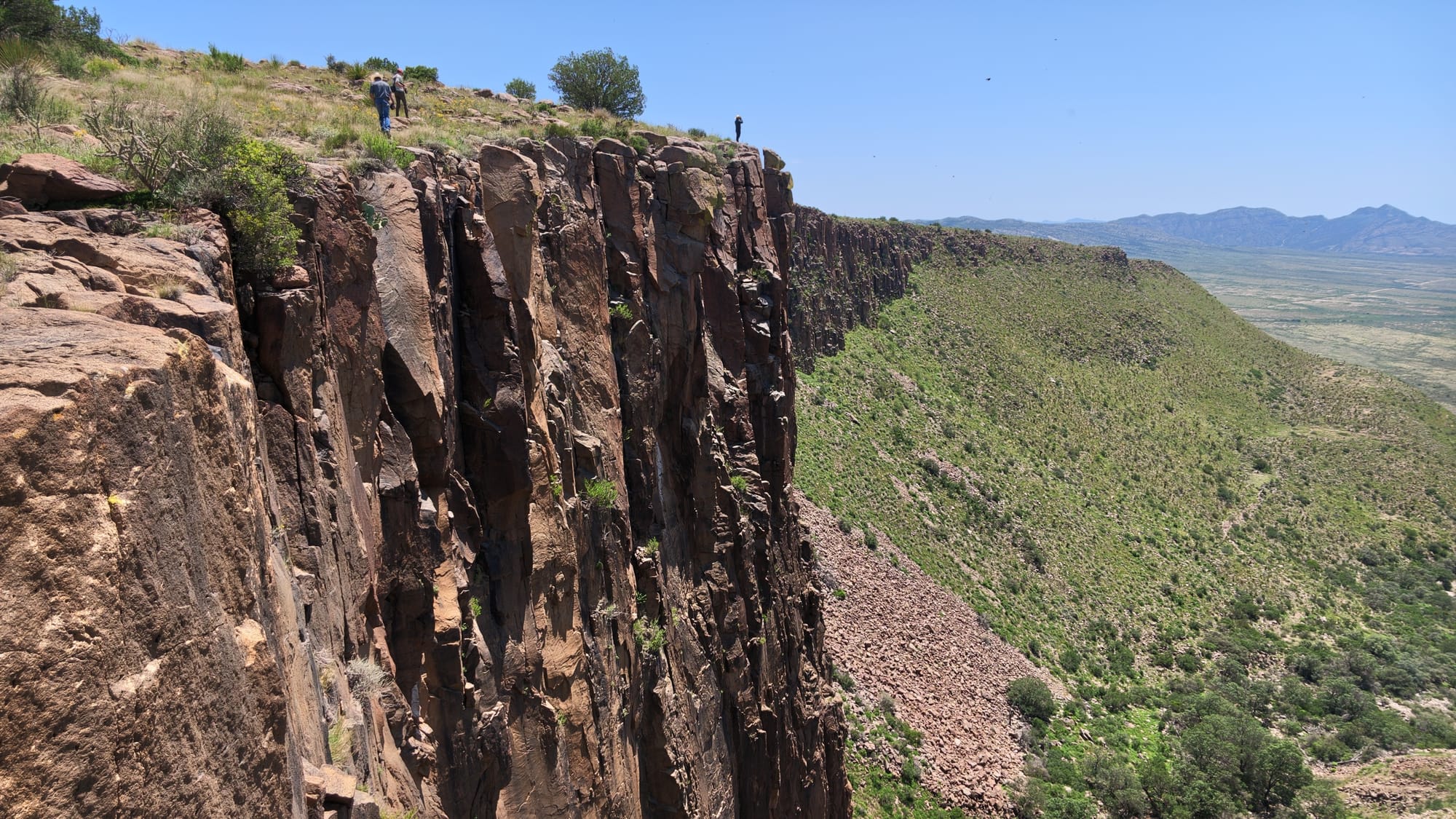
Cory Ames: This second morning was different. Clear sky, sun already up over the mesas, the creek running low enough that Cody pulled the truck through it without a word about it. But the narrow road up the mountain was the same. The canyons and rock faces dropping away below looked as they had the day before. But there is something about ascending Elephant Mountain in clear, dry weather.
Having done it in rain the day before, the sun on the rock, the tires seemingly on a little more solid ground, it puts you at ease in a way that the conditions may or may not actually justify. Whether that's earned confidence or a false one, I couldn't say. Annie and I tried to enjoy the ride. We were going up for a second time now, Jose along with us, to attempt at seeing the results of the decades of tireless management and advocacy work for ourselves.
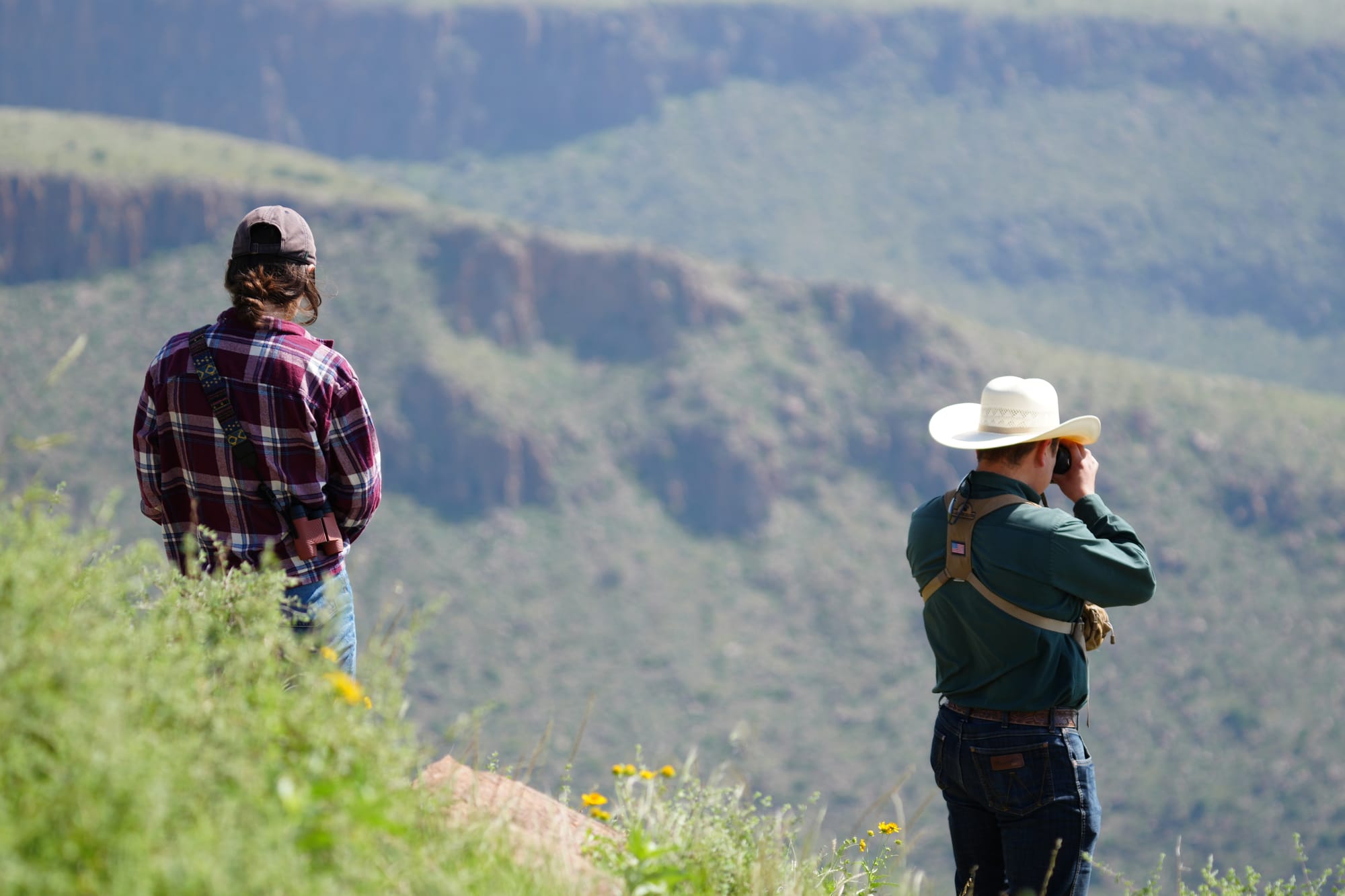
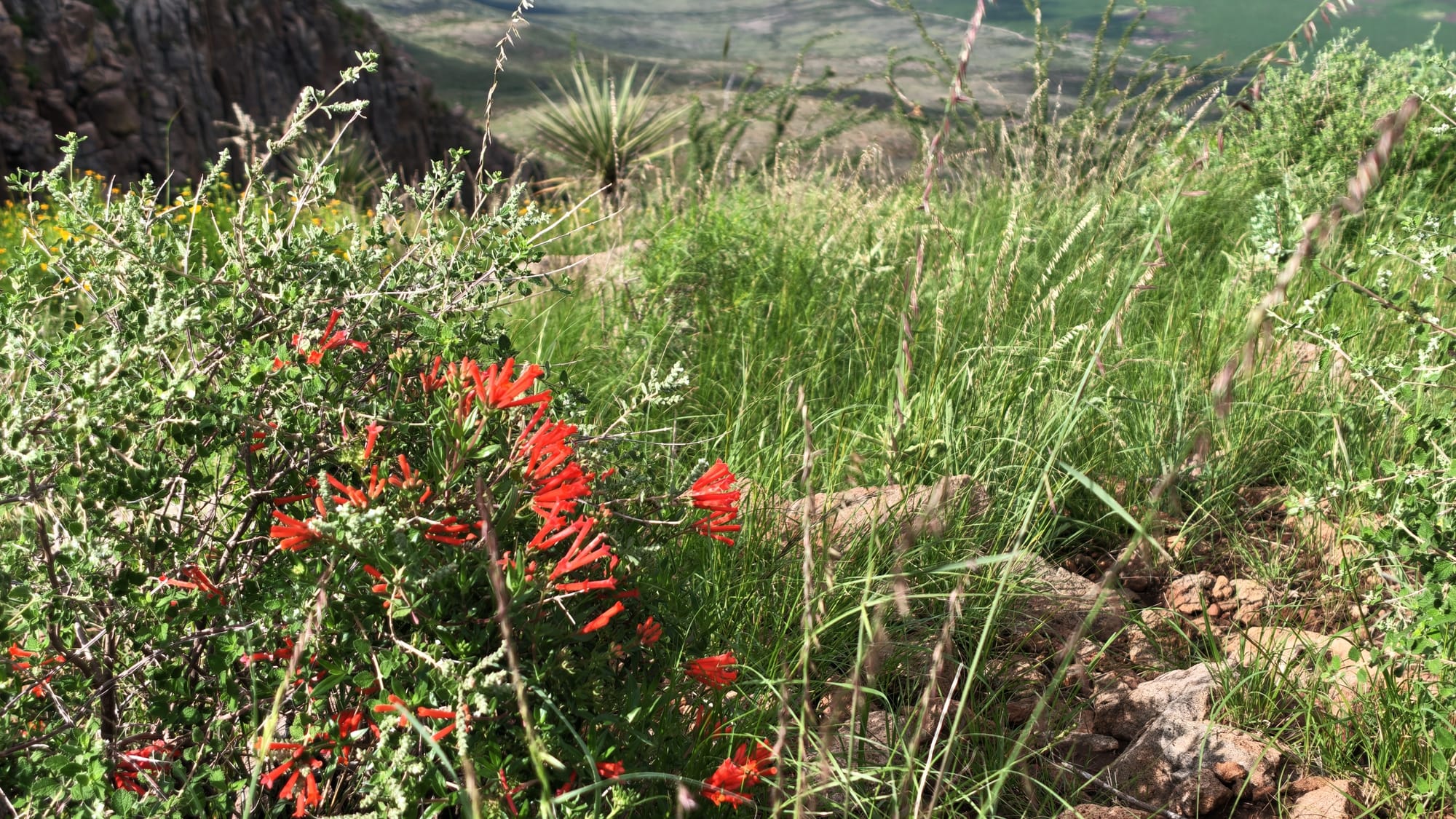
For most of the morning, the mountain gave us everything but sheep. We stopped at every overlook, glassed every ridgeline, every shadow in the rock, and everywhere we looked, the mountain had responded to the rain from the day before. Fresh green on the brush, forbs pushing up between the boulders. Exactly the kind of high-nutrition bites Cody told us bighorn go looking for. By every sign, this was a mountain built to hold them. We just couldn't find them, until we got our shot.
Jose Etchart: Look at the closest rocks to us. These boulders that are in front of us. You see that one that goes like that, at the edge? Just go up high and look in there. They're in there, in those. Right there. Look straight down. You can see her body. She's kind of a little tan color.
Cory Ames: We found them up on the mountain in those rocks, exactly as you might expect. There's something about seeing the bighorn sheep, even at a distance, even through a zoom lens or binoculars. It's as clear as they are hard to see. They belong there in a way you might not be able to articulate, but so obviously feel when you yourself, hooves and all, are out there on a ledge trying to catch even so much as their hindquarters, as it all ends up blending into the jagged rock.
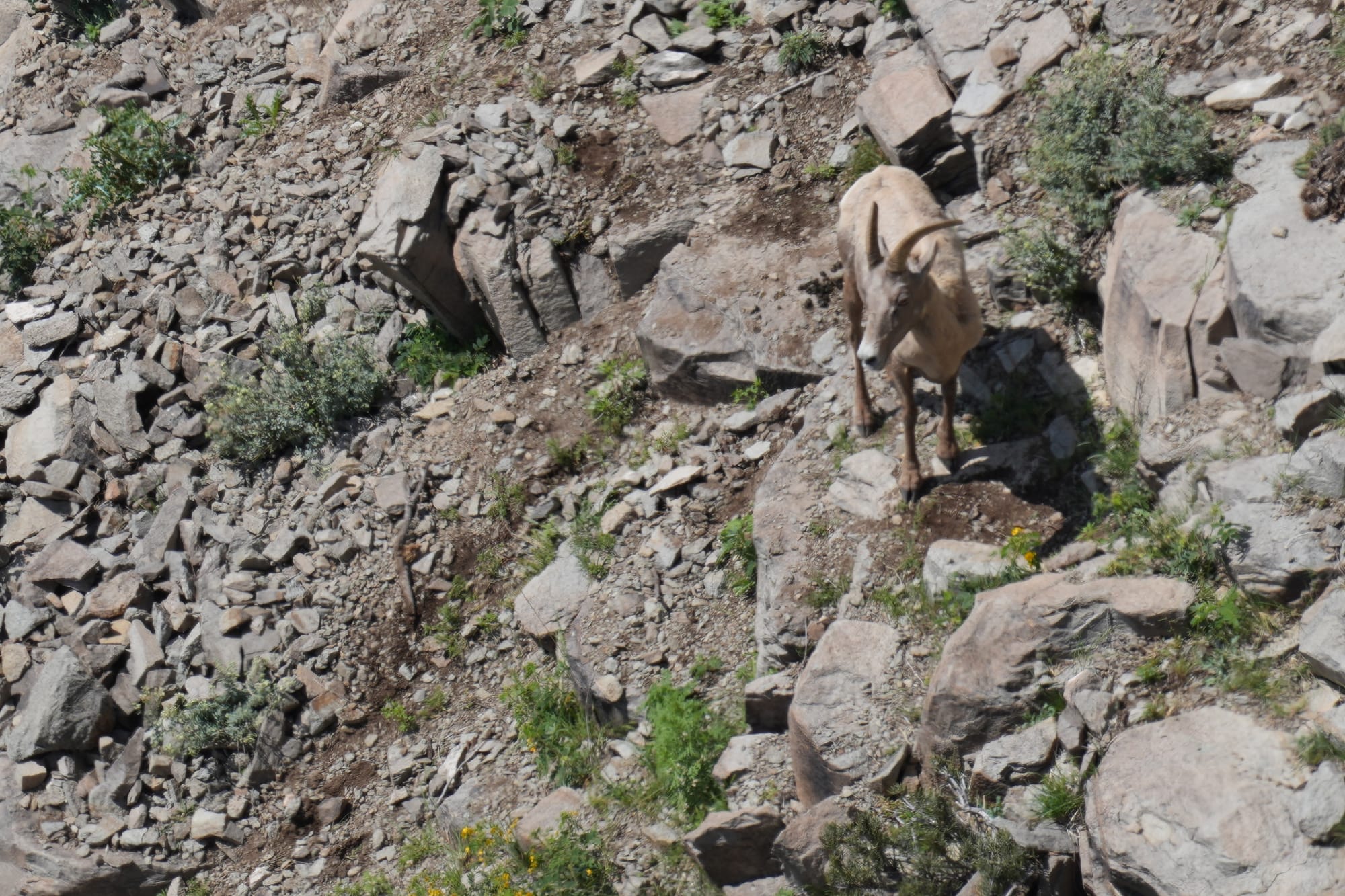
I'm certain they should be there. The bighorn sheep matter, but so does this. The fact that Texans, now decade after decade, have decided that they were worth fighting for. That the work was worth doing even when the herds collapsed, even when the odds said otherwise. What we choose to protect and honor says something about us, about Texas. The bighorn sheep, the mountain they live on, the sky island habitat that supports them, and countless other species that make our state what it is.
They are an inheritance we either pass on or don't.
Why They Stay
Cody McEntire: The reason I'm here is because back in 2020, there was a helicopter accident. It was during surveys down at Black Gap, and it ended up killing the biologist and the technician here. Both close friends of mine. I'd been working with them, and I'd known one of them since I was a little kid. Dewey Stockbridge and Brandon White. Dr. Bob Dittmar was also in there with them, and he was the first state wildlife veterinarian. My focus since I'm here now is to continue the work that they started. To honor their memory and their legacy is huge.
My dad was actually the first technician on this WMA, so it's always been a part of my life. To be able to take the reins on it and really focus on habitat restoration, growing the bighorn sheep herd, and providing more hunting opportunities, that was really the goal I set for myself when I started college, and I feel like I'm on that path now.
Jose Etchart: It's something that was here. We owe it to them to put them back on the landscape and protect them as long as we can, and also for future generations. Think about all the people who decided, back in the '60s, that this was something we needed to do.
In 2019, it kind of looked dark, and our population declined. But if we just lift our arms up and say, "Ugh, we're done with it, we just can't make them live," what happens to all the other people who worked so hard to try to bring them back? Right now, we're at about 720 observed individuals, so we're estimating about 750 or so in Texas. They're slowly coming up. In some of those areas where the decline did happen, you can see they're starting to build some resiliency, and the numbers are coming back up.
It's very, very special that we still have desert bighorn back in Texas. Now we have all these challenges, like disease, that are hitting us. But the passion when you come out here and see a desert bighorn... I don't think there's anybody who leaves seeing a bighorn and says, "Man, they shouldn't be there." I think everybody's like, "They've got to be there."
Even though it's been so many years of drought, once you get a couple of showers, you see how the grass responds, the browse and everything. It's just pretty magical. The mountain in itself, how it works for the sheep.
Acknowledgments
Thank you to Cody McEntire and the entire staff at the Elephant Mountain Wildlife Management Area for their time, their generosity, and for doing this work every single day. To Jose Etchart and the Texas Parks and Wildlife Desert Bighorn Sheep Program. And to Ben Masters and Fin and Fur Films, thank you for sharing your bighorn and Elephant Mountain footage.
Further Resources
- The magazine story: my written companion piece on Elephant Mountain WMA in Texas Parks & Wildlife magazine. Subscribe to the magazine.
- Visit Elephant Mountain WMA: Texas Parks and Wildlife. Open for hunting, wildlife viewing, and hiking.
- Desert bighorn sheep in Texas: TPWD's Desert Bighorn Sheep Program.
- Support the work: the Texas Bighorn Society.
- Watch: Deep in the Heart 2: Texas Rivers, by Ben Masters and Fin and Fur Films.
Share
Written by
Cory Ames
Cory is a naturalist, writer, and podcaster. He hosts Ensemble Texas, a podcast about sustainable development in San Antonio.
All posts by Cory Ames